110
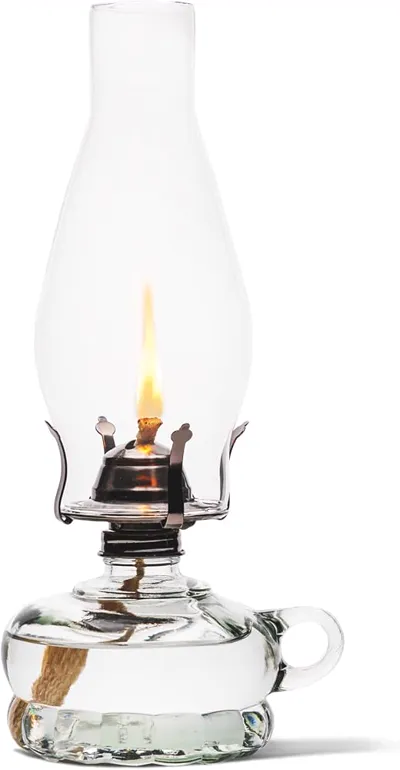
Chamber Oil Lamp 110
12-inch chamber lamp, clear glass
11.8 ozFuel capacity
up to 20 hoursBurn time
$18.99

Fuel capacity, burn time, chimney base diameter and wick width for all 13 items we currently build. Lamps and lamp oil out of Menomonee Falls, Wisconsin since 1964.
Grouped the way you actually shop: pick the lamp, then the fuel, then the parts that fit it.
A chamber lamp, a hurricane lantern and our tallest indoor lamp. Compare them on how much oil each one holds.
12-inch chamber lamp, clear glass
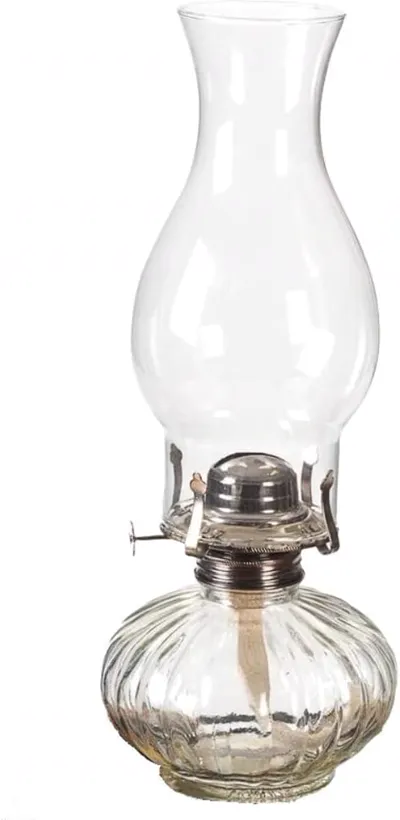
Vintage-style indoor lamp, our largest reservoir
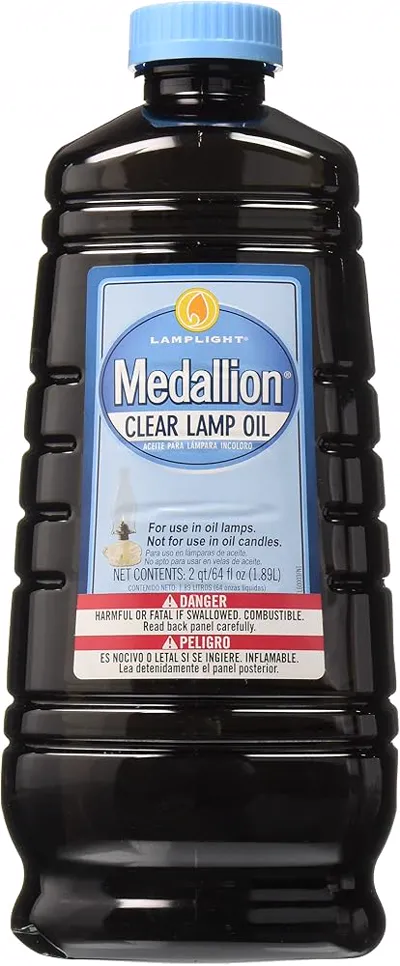
Clear liquid paraffin we blend for indoor burning. Bottles at 32 and 64 oz, plus a 100 oz jug.
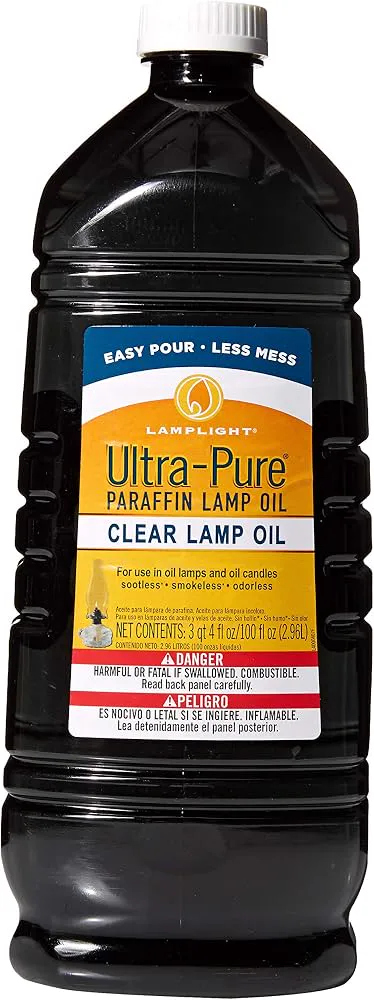
Three-quarter gallon of clear paraffin oil
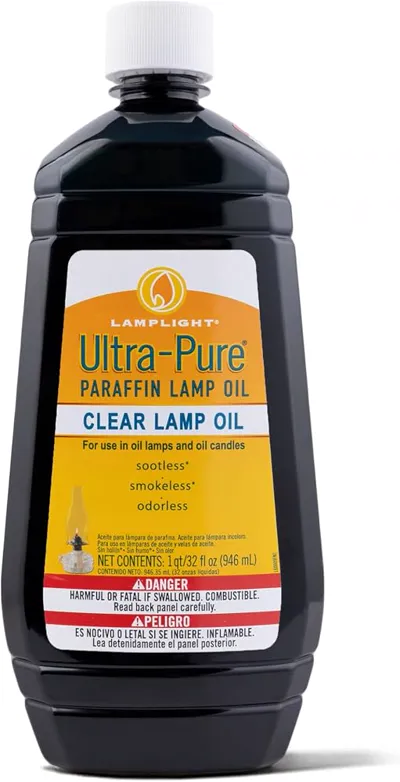
The standard indoor fuel bottle
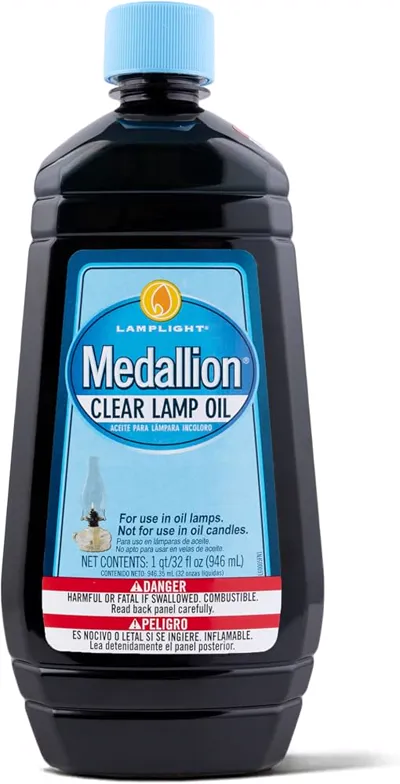
Alternative paraffin fuel, easy-pour bottle
The replaceable half of a lamp. We size these by base diameter and wick width, not by looks.
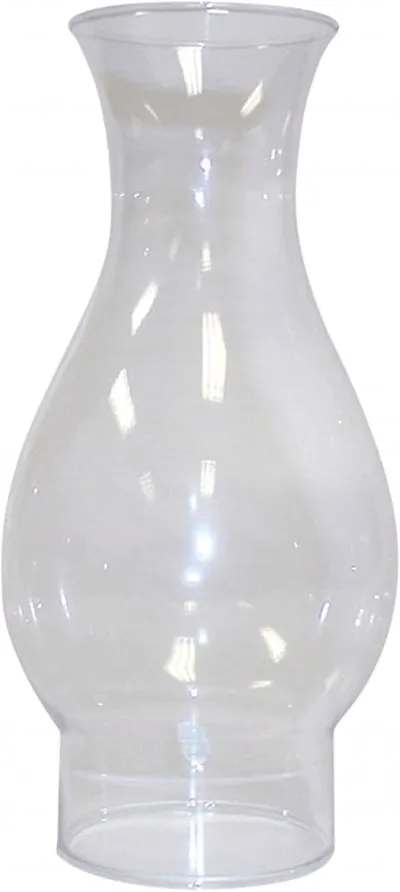
Replacement glass chimney for large lamps
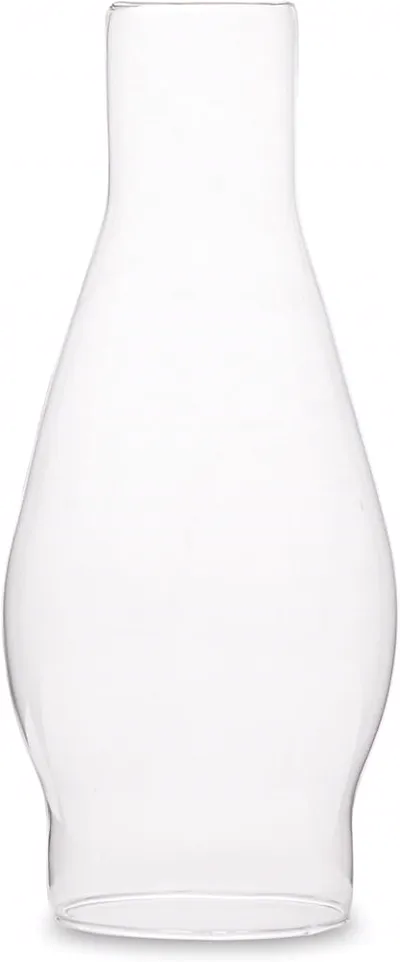
Replacement glass chimney for chamber lamps
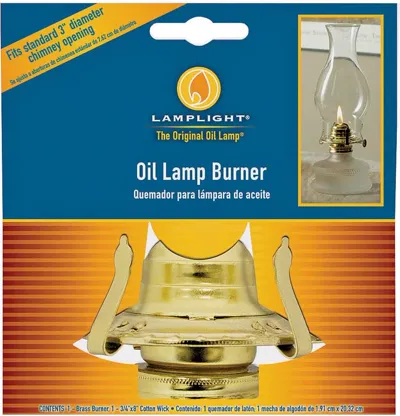
Lamps and fuel we pack together for a drawer or a storm shelf.
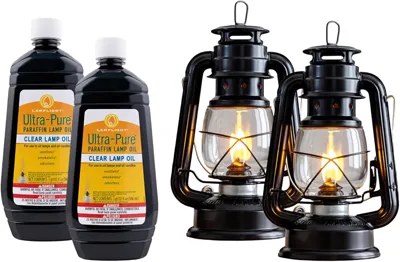
Two hurricane lamps plus two 32 oz bottles of oil
Fill our chamber lamp and it runs about 20 hours. The Ellise, with its bigger reservoir, gets closer to 28. That is what we design for. You fill it once and stop thinking about it, which matters more on the second night of an outage than it does at dinner.
See our rangeThe plain facts behind our range.
Liquid paraffin, sold by us under two names. Ultra-Pure (model 60009 in the 32 oz bottle, 60003 in 64 oz, and a 100 oz jug) is our 99% pure grade: sootless, smokeless, odorless. Medallion (60005) is our other clear paraffin. Both are blended for wick-fed lamps, and neither is kerosene.
Yes. We were founded in 1964 and have been part of W.C. Bradley Co. since 1998, working out of Menomonee Falls, Wisconsin. Lamps, fuel and spare parts are still in production. What no longer exists is our own direct-to-consumer store: the old lamplightfarms.com address now redirects to our parent company's Tiki site, which is why people assume we shut down. The longer version is on our brand status page.
It scales with the reservoir. Our chamber lamp 110 holds 11.8 oz and is rated up to 20 hours. The Ellise holds 19.5 oz and is rated up to 28. Each lamp in our emergency kit holds 5 oz, so around 15 hours. Turn the flame down and every one of those numbers stretches, with less sooting.
Our chimneys go by the opening at the bottom: 411B has a 2-5/8 in base for chamber lamps, 417B has a 3 in base for the larger flaretop lamps. Wicks come in 5/8 in and 3/4 in widths, both 8 in long. Our parts finder puts every measurement in one table.
Anything carrying our name dates from 1964 onward, because that is when we started. Packaging marked with W.C. Bradley Co. is 1998 or later. Lamps that look like ours but carry no Lamplight mark are usually generic hurricane lamps from other makers. More on marks and dating in our dating guide.
Most are not, ours included. Mass-produced clear-glass hurricane and chamber lamps are common and usually change hands for less than a new one costs. The money sits with named 19th-century makers, colored or cased glass, and complete matching shades. We go through what moves the number in our value guide.
That is much of why we still make them. No battery to go flat in storage, fuel that keeps indefinitely, one fill covering a night. The weak point is consumables: keep a spare 3-pack of wicks with the lamp, or a stored kit works exactly once.
It is an open flame, so it is as safe as you make it. Stand the lamp on something stable and heat-resistant, keep it clear of drafts, curtains, children and pets, burn only fuel meant for lamps, trim the wick so it does not smoke, and put it out before you leave the room or go to sleep.
We have been making oil lamps and lamp fuel since 1964, out of Menomonee Falls, Wisconsin, and we have belonged to W.C. Bradley Co. since 1998, alongside the Tiki torch line most people know better. That detail matters more than it sounds. We stopped running a storefront of our own, so our range is spread across hardware chains and marketplace listings, and the model numbers are the only reliable way to tell one item from another.
So we collected them here. Three lamps, three spare parts, four fuels and one kit, each with its specification and a note on what it pairs with.
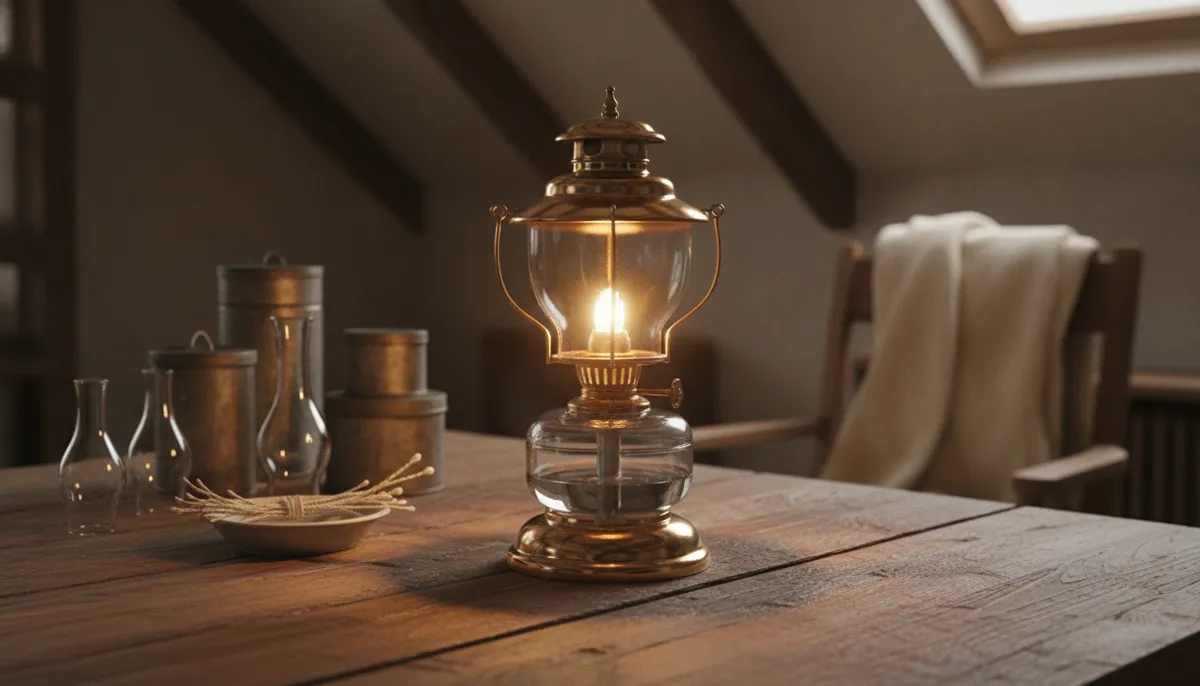
Our chamber lamp, model 110, is the small one: 12 inches tall, a reservoir holding 11.8 oz, rated up to 20 hours on a fill. It takes our 411B chimney and a 5/8 in wick. This is the lamp people buy one of, then come back for three more after the first outage.
The Ellise is our large one, and the numbers show it: 19.5 oz of fuel, up to 28 hours. It uses the wider 3 in flaretop chimney, the 417B, and a 3/4 in wick. If one lamp has to cover a whole evening without attention, get this one.
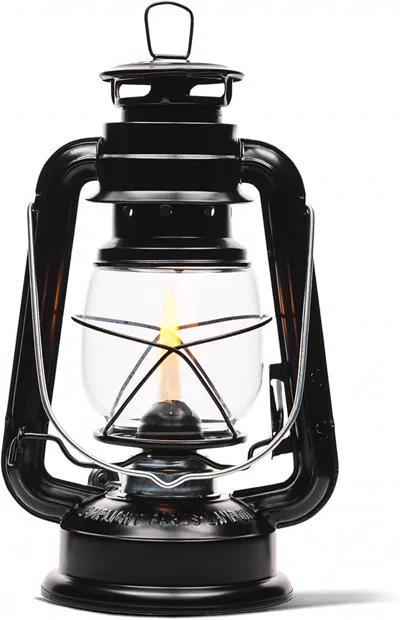
We build the Farmer's Lantern 52664 for a different job. Black metal frame, caged glass, meant to be carried and set down on a workbench or a porch rail rather than a dinner table.
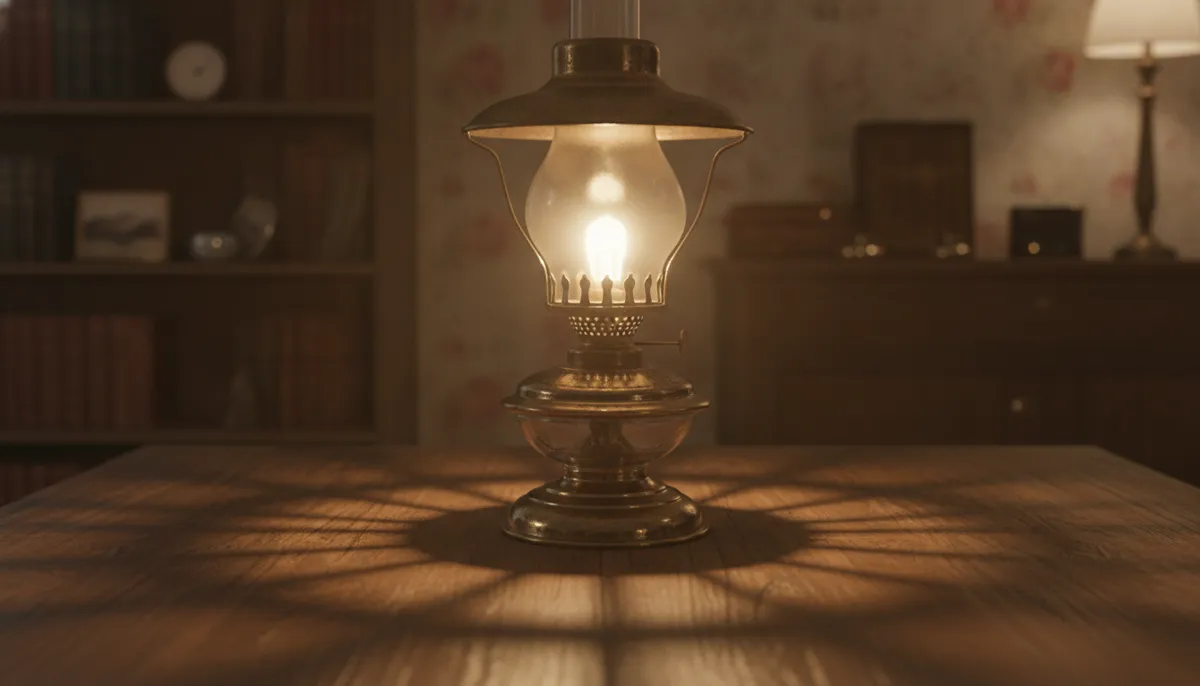
Everything we bottle is liquid paraffin, and none of it is kerosene. Kerosene smells, and in a closed room that ends the conversation. Paraffin is why one of our lamps can sit on a kitchen table without anyone noticing it is lit.
Ultra-Pure is our 99% grade: sootless, smokeless, odorless. It comes as 60009 in a 32 oz bottle, 60003 in 64 oz, and a 100 oz jug for people who burn lamps as a habit rather than in emergencies. Medallion 60005 is our other clear paraffin, also 32 oz, same easy-pour neck.
One practical point on quantity. A 32 oz bottle fills our chamber lamp roughly two and a half times, so somewhere near 50 hours of light. Enough for most storms, not enough for a season of evening use. That is why we sell the jug.
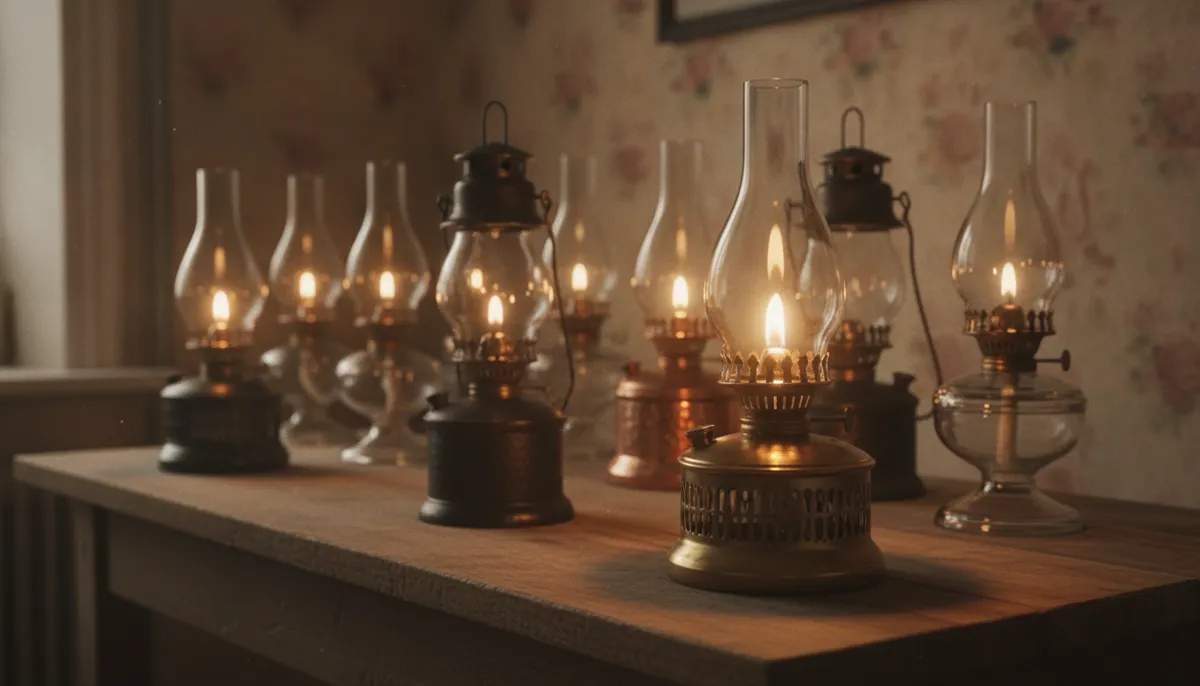
We size our chimneys by the opening at the bottom, not by height, and that is where most wrong orders start. The 411B has a 2-5/8 in base and stands 7.75 in tall, for chamber lamps. The 417B has a 3 in base, stands 8.5 in, flares at the top, and goes on the larger lamps. A tall chimney with the wrong base diameter will not sit, however close the height looks.
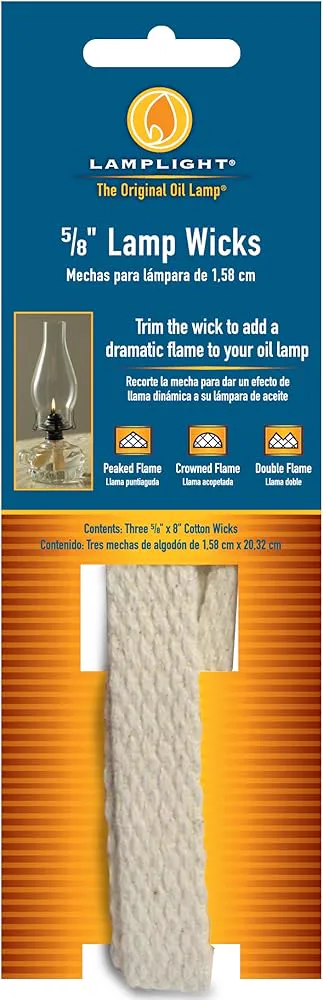
Our brass burner 31507 is the large one, fitting bases up to 3 in across, and it takes the 3/4 in wick. Wicks are a consumable and we make two: 99963 at 3/4 in wide and a 5/8 in version, both 8 in long, sold in threes.
Measure before you order, or use our parts finder, which lists every base diameter, height and wick width in one table.
A lamp that smokes usually has too much wick showing. That is not a defect and we get asked about it constantly. Trim the wick flat, light it, then turn it down until the flame stops making black tips. Soot on the inside of the glass has the same cause and wipes off once the chimney is cool.
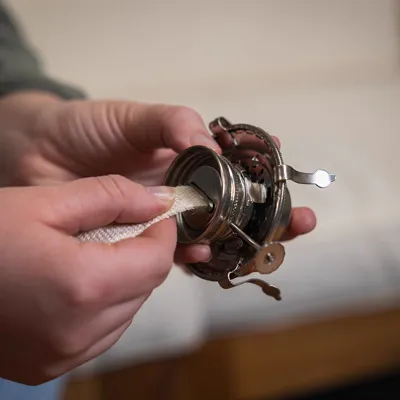
Replace a wick when it gets too short to reach the fuel, or when the tip goes brittle and carbonized. Neither is a repair job. Loosen the burner, feed a new wick through, and the lamp is thirty years old again.
The case for our lamps over a battery lantern is storage. Paraffin does not self-discharge. A bottle bought this year works in five. The LED lantern in the same drawer will have flat cells by then, and rechargeables will be worse.
Our emergency kit pairs two hurricane lamps with two 32 oz bottles. Each lamp holds 5 oz, around 15 hours, so the pair plus the fuel covers several nights. Add a 3-pack of wicks and a box of matches to the same container and it stays a working kit rather than a decorative one.
The usual precautions apply, because it is a live flame: heat-resistant surface, nothing flammable overhead, away from where children and animals move, out before sleep.